
Why fall preparation matters here
Green Bay averages about 55.6 inches of snow a season. A gutter that goes into winter full, sagging or pitched wrong spends months holding ice, and the thaw shows the damage in spring. A couple of hours in fall prevents most of it.
The fall checklist
| Task | How | Why |
|---|---|---|
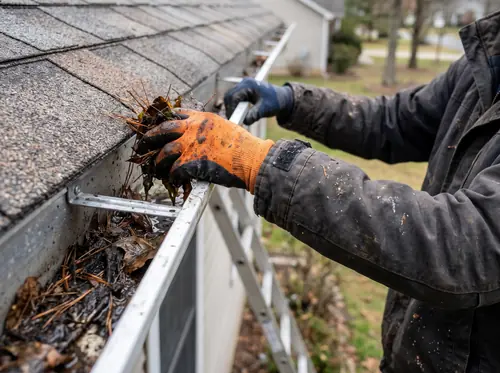
| Clean the troughs | By hand after leaf drop | A full gutter freezes solid |
| Flush downspouts | Hose from the top | Clogged elbows split in a freeze |
| Check pitch | Run water and watch for standing pools | Standing water becomes ice |
| Check hangers | Look for bowing and loose spikes | Ice load will find weak hangers |
| Reseal leaky miters | On a dry day above freezing | Sealant cures poorly in cold |
| Disconnect rain barrels | Drain and store | A full barrel can crack |
| Set extensions | Several feet out, clear of where snow will be piled | Meltwater needs somewhere to go |
| Trim limbs | Back from the roof | Snow-loaded limbs break |
| Look in the attic | Check insulation and that soffit vents are open | Attic heat causes ice dams |
Where to pile snow
Plan snow-blower and shovel piles away from downspout outlets. A downspout that ends in a snowbank cannot drain during a thaw, so meltwater backs up into the gutter and refreezes.
During winter
- Watch for thick icicles and ice along the eave; they point to an ice dam.
- Use a roof rake from the ground after heavy snows, lifting it over the gutter.
- Do not chip ice out of gutters.
- If water comes inside, call for professional ice dam removal.
After the thaw
Walk the house and look for bent hangers, bowed runs, open miters and split downspouts. See ice dam damage repair.