
Where steel fits
- Ice and snow load on long eaves
- Hail exposure; the National Weather Service records large hail in Brown County most years
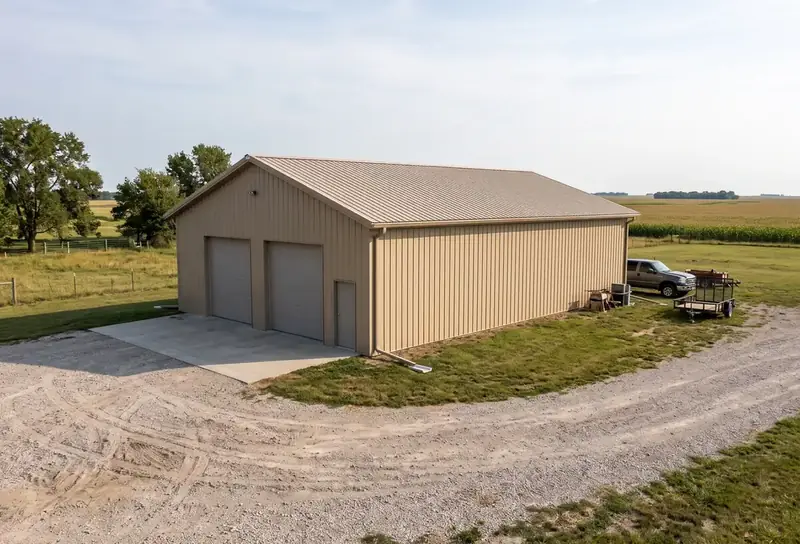
- Metal shops and pole barns on larger lots in Hobart, Lawrence and Ledgeview
- Commercial buildings with box gutters
Galvanized vs Galvalume
| Type | Coating | Notes |
|---|---|---|
| Galvanized | Zinc | Strong; rusts where scratched |
| Galvalume | Aluminum-zinc | Usually longer life |
| Painted steel | Factory paint over coating | More colors; scratches still expose steel |
Steel vs aluminum
| Steel | Aluminum | |
|---|---|---|
| Stiffness | Higher | Lower |
| Rust | Possible | None |
| Weight | Heavier | Lighter |
| Colors | Fewer | Many |
| Seamless | Less common | Standard |
Installing steel gutters
- Check that the fascia can carry the extra weight.
- Hang on hidden hangers or brackets at close spacing.
- Seal joints and treat cut edges.
- Fit downspouts and extensions.
- Water-test.
Keeping steel from rusting
- Keep the trough clean so water does not sit.
- Touch up scratches.
- Check pitch so no section holds water through winter.
- Avoid contact with copper.
National cost guides such as Angi put installed steel at roughly $6 to $14 a foot.
Steel for shops and pole barns
Metal shops and pole barns shed snow and rain fast from long steel roofs. A steel box or K-style gutter, sized for the roof and with large downspouts, keeps water and ice away from overhead doors. Set the gutter low enough that sliding snow passes over it, or fit snow guards on the roof.
Life expectancy
Steel lasts as long as its coating holds. Keeping the trough clean, pitched and free of standing water, and touching up scratches, extends its life. Cut edges at miters and outlets are the usual places rust starts.
In short
Steel gutters come galvanized, Galvalume or factory-painted. On houses, steel is chosen for stiffness; on shops and pole barns, it is chosen to match a steel roof. Either way, hangers should be close-spaced and cut edges treated to slow rust.